


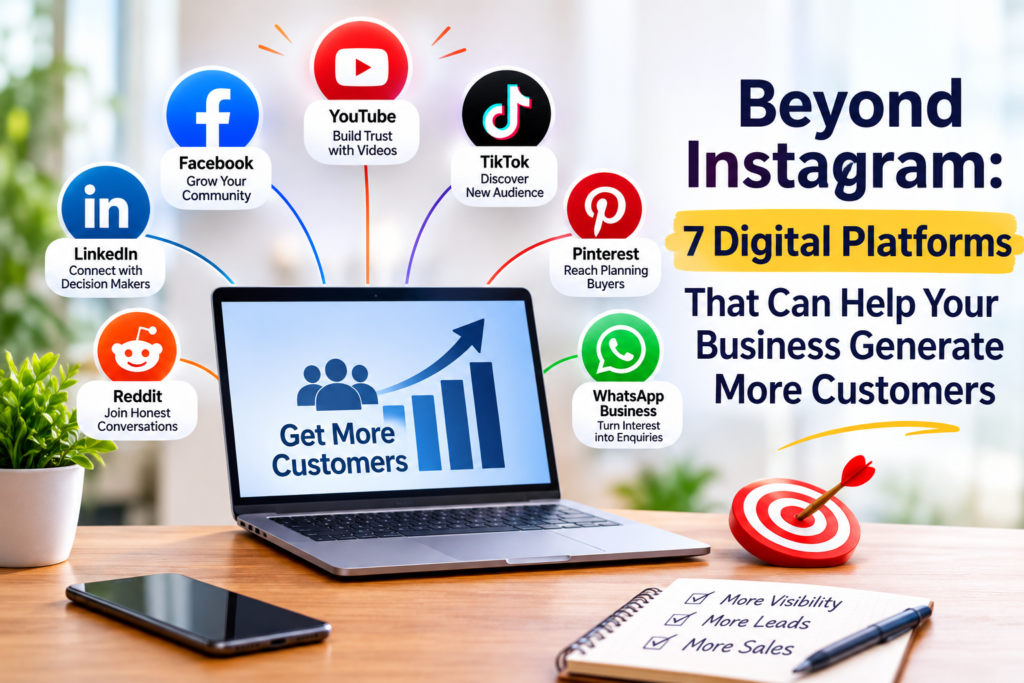
Instagram feels like the obvious answer. You post a reel, run a few stories, and wait for enquiries. For many businesses that works for a while, until reach drops, an algorithm update hits, or the audience you need simply isn’t scrolling there.
That is when owners start asking where else their customers are hiding. The honest answer is: in many places. Choosing the right digital marketing platforms can spread your risk and put your brand in front of buyers who never see your Instagram feed.
Instagram is built for visual discovery, and it does that well. But it is a rented space. You don’t control who sees your posts, and a sudden change in reach can empty your enquiry inbox overnight.
There is also an audience problem. A B2B consultancy, a local plumber and a software company all need different kinds of conversations. Looking at Instagram alternatives for business is not about abandoning the platform. It is about matching each goal with the place where that goal is easiest to achieve.
Different platforms play different roles in a buyer’s journey. One helps people discover you, another helps them trust you, and a third makes it easy to message you and close the sale.
When you combine several online marketing channels, each one supports the others. Someone may find you on YouTube, check your credibility on LinkedIn and finally message you on WhatsApp. If you were present on only one of these, that customer might never have reached you.
What it offers: Pages, groups, events, Marketplace, local targeting and a mature ad system that lets you reach people by location, interest and behaviour.
Who is there: A broad audience across age groups, with strong usage among adults who make household and family purchase decisions.
Done properly, Facebook marketing for small businesses can be one of the most practical ways to win local customers. Think clinics, salons, tutors, restaurants, home services and boutique retailers.
How to generate leads: Run lead-form ads, publish helpful posts that answer common questions, and keep your page details, reviews and response time in order. Joining or building a community group around your niche also builds trust over time.
Strengths and limits: Targeting is excellent and the learning curve is gentle. The downside is that organic reach for business pages is modest, so some paid support is usually needed.
Best for: Local service providers, retailers, event-led businesses and anyone selling to families.
What it offers: Company pages, personal profiles, articles, newsletters, groups and targeting by job title, industry and company size.
Who is there: Professionals, founders, recruiters and decision makers.
Smart LinkedIn marketing for businesses starts with people, not just the company page. Founders and team members sharing real experience often get more attention than polished brand announcements.
How to generate leads: Share case-style insights, comment thoughtfully on industry posts, and use direct outreach that opens with value rather than a pitch. Sponsored content and lead-gen forms can speed things up when budget allows.
Strengths and limits: The audience quality is high for B2B, but ad costs tend to be higher and the content tone needs to stay professional.
Best for: Consultants, agencies, SaaS companies, manufacturers, financial services and recruitment firms.
What it offers: A visual search engine where people save ideas for things they plan to buy, make or do. Pins keep circulating for months, sometimes years.
Who is there: People in planning mode, often researching home décor, weddings, fashion, food, travel and DIY projects.
Good Pinterest marketing strategies treat the platform like a search engine rather than a social feed. Use clear keyword-rich pin titles, descriptions and board names so your content appears when people search.
How to generate leads: Create vertical pins that link to useful blog posts, product pages or guides. Seasonal boards, checklists and inspiration collections work especially well.
Strengths and limits: Content has a long shelf life and attracts buyers early. But results build slowly, and it suits visual products better than abstract services.
Best for: Interior designers, wedding planners, boutiques, food brands, travel businesses and creative studios.
What it offers: The world’s second most-used search destination for how-to content, plus Shorts, long-form video and a strong link with Google Search results.
Who is there: People actively looking to learn, compare or solve a problem before spending money.
Effective YouTube marketing for business is mostly about answering real questions. A short explainer, a product demo or a customer walkthrough can build confidence faster than any written page.
How to generate leads: Build videos around questions your sales team hears again and again. Add clear calls to action in the description and the video itself, and use playlists to guide viewers toward enquiry-ready content.
Strengths and limits: Videos keep working long after publishing and support trust deeply. The limitation is production effort, though simple, honest videos often perform fine.
Best for: Healthcare practices, education, software, home improvement, finance and any business with a product or process worth explaining.
What it offers: Short-form video, a discovery-driven feed, creator collaborations and ads, where good content can reach new people even if your account is small.
Who is there: A younger, entertainment-seeking audience, though older users are steadily joining.
Brands succeed with TikTok marketing for businesses when they feel human. Behind-the-scenes clips, quick tips, myth-busting and customer stories outperform polished commercials.
How to generate leads: Use a clear hook in the first seconds, keep videos simple, and direct viewers to your profile link, a landing page or a messaging channel. Creator partnerships can add credibility.
Strengths and limits: Reach potential is large and costs can be low. But trends move fast, the audience may not match every sector, and conversion can take longer.
Best for: Fashion, food, beauty, fitness, lifestyle, events and consumer brands.
What it offers: Thousands of topic-based communities, where people ask detailed questions and value straight answers.
Who is there: Curious, research-driven users who dislike obvious advertising.
Doing Reddit marketing for businesses well means contributing first and promoting later. Read each community’s rules, answer questions genuinely and share your expertise without pushing a link in every comment.
How to generate leads: Become a recognisable, helpful voice in relevant communities. People who trust your answers will visit your profile or website on their own. Reddit ads can complement this.
Strengths and limits: The audience is highly engaged and honest feedback is valuable. But hard selling gets rejected quickly, and community moderators can remove promotional posts.
Best for: Software, tech products, hobby-driven products, financial education and specialised services.
What it offers: A business profile, product catalogue, quick replies, labels and broadcast tools that make one-to-one communication simple.
Who is there: Practically everyone, which makes it especially powerful in markets like India where people prefer to message a business before buying.
As an online customer engagement platform, WhatsApp Business shines at the final stage. Customers can ask questions, get quotes, confirm bookings and receive updates in the app they already use daily.
How to generate leads: Add click-to-chat buttons to your website, ads and social profiles. Set a greeting message, answer quickly and use labels to track where each customer stands.
Strengths and limits: It is personal, immediate and great for conversion. But it works best alongside other channels, since it rarely brings strangers to you on its own, and spamming contacts damages trust.
Best for: Local businesses, e-commerce brands, clinics, real estate, coaching and service providers.
Here is a quick view of how these platforms compare, so you can see where each one fits.
Platform | Ideal Business Types | Marketing Opportunity | How Customers Are Acquired |
Local services, retail, family-focused brands | Local reach, groups, targeted ads | Lead forms, page enquiries, community trust | |
B2B, consultants, SaaS, finance | Thought leadership, decision-maker targeting | Direct outreach, lead-gen forms, expert content | |
Décor, weddings, fashion, food, travel | Long-lasting visual search traffic | Pin clicks to blogs and product pages | |
YouTube | Education, healthcare, software, home services | Trust-building video and search visibility | Tutorials, demos, descriptions with clear CTAs |
TikTok | Lifestyle, beauty, food, fitness, consumer brands | Fast discovery with short video | Profile links, creator collaborations, landing pages |
Tech, niche products, specialised services | Genuine community conversation | Helpful answers that earn profile and site visits | |
WhatsApp Business | Local brands, e-commerce, clinics, real estate | Direct conversation and follow-up | Click-to-chat, catalogues, quick replies |
Start with the simple rule: go where your buyers already spend time. The best social media platforms for business are not the biggest ones, they are the ones that match your customer, your goal and your capacity.
By business goal. If you want brand awareness, video and discovery platforms work well. If you need qualified leads, look at LinkedIn, Facebook ads and messaging. If you want long-term search traffic, Pinterest and YouTube reward patience.
By target audience. Ask who you are really selling to. A founder buying software behaves differently from a parent booking a tuition class or a homeowner planning a renovation.
By budget. Limited budget means choosing two platforms and doing them properly rather than appearing on six and doing none well. Larger budgets can test paid campaigns across several channels and double down on what works.
For most teams, the smartest digital platforms to get more customers are two or three that fit their audience, plus a messaging channel to close enquiries.
A small local business. A neighbourhood dental clinic can use Facebook for local awareness, YouTube for short explainers about common treatments and WhatsApp for appointments. Three platforms, each with a clear job.
A startup. A new B2B software company might build credibility with founder posts on LinkedIn, answer niche questions on Reddit and publish product walkthroughs on YouTube. This approach builds trust before big ad budgets are available.
An established brand. A well-known home décor brand could add Pinterest for planning-stage shoppers, TikTok for younger audiences and paid campaigns to scale what already works. At this stage, measurement matters most.
Likes and views are not the goal. Revenue is. The bridge between the two is a clear path that tells people what to do next.
Knowing the options is one thing. Running them well is another. The GC Digital works as a growth-focused partner, helping businesses build visibility, reach relevant audiences and turn attention into measurable results.
Our social media marketing services help brands build consistent, platform-specific content. For search visibility, our SEO and AEO services make sure your business appears in traditional results and in AI-driven answers. When you are ready to scale, our performance marketing solutions focus on cost-effective lead generation and clear reporting. And across the whole journey, our digital marketing services connect strategy, content and measurement.
Choosing from the many online platforms for business growth can feel overwhelming, and that is exactly where an experienced team saves time and money.
Instagram can stay in your plan, but it shouldn’t be your only plan. Each platform above does a different job, from building local trust to winning decision makers, from capturing planning-stage buyers to closing conversations. Start with the two or three that fit your audience, track what brings real enquiries and expand from there.
The right mix of digital marketing platforms will not just increase visibility. It will give your business a steadier, more predictable way to attract customers. If you are ready to build that mix, explore The GC Digital’s digital marketing solutions and let us help you choose, launch and grow the channels that fit your business.